January 7–10, 2027 · Los Angeles
Modern Language Association Convention
Elkins will speak at the 2027 MLA convention. Session title and program details will be added when the final program is available.
2027 MLA convention →Speaking
Katherine Elkins speaks about how AI systems reason, persuade, coordinate, fail, and interact with people and institutions.
The talks draw on current research in model behavior, agents, narrative, evaluation, governance, and cultural memory. They address empirical findings and system design as well as their consequences for human judgment.
Invited talks, keynotes & research presentations
January 7–10, 2027 · Los Angeles
Elkins will speak at the 2027 MLA convention. Session title and program details will be added when the final program is available.
2027 MLA convention →Forthcoming · Schmidt Sciences · London
Elkins will speak at a Schmidt Sciences convening in London, bringing the work of Archival Intelligence into a broader conversation about humanities research and AI.
Humanities and AI Virtual Institute →Forthcoming · Keynote · University of Michigan
Elkins has been invited to deliver a keynote at the University of Michigan’s annual gathering for the data science and AI community. The event is being rescheduled; an updated date will be posted by the organizers.
View the summit and keynote speakers →September 24–25, 2025 · RALLY Innovation · Indianapolis
A conversation with Leslie Grandy and Ryan Frederick about human algorithms and the ways narrative, emotion, and persuasion shape decisions and intelligent systems.
RALLY 2025 agenda →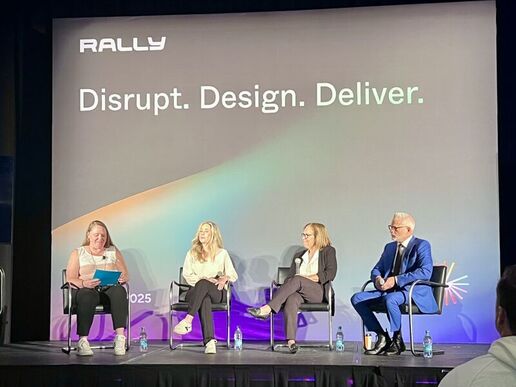
September 18–19, 2025 · Purdue University
Presented at the Modern Fiction Studies AI Conference, which brought researchers in literature, philosophy, and computer science together to examine AI’s possibilities, risks, and unresolved questions.
September 17, 2025 · Opening keynote · Concordia College, Moorhead
The opening plenary for Concordia College’s Faith, Reason, and World Affairs Symposium, followed by participation in the symposium’s closing conversation.
Watch the opening plenary →March 7, 2025 · NEH Symposium · University of Colorado Boulder
An invited presentation at CU Boulder’s NEH symposium, alongside Jo Guldi and a fireside conversation with Safiya Noble, on what data science and AI make possible—and difficult—for humanities research.
February 2025 · Kahn Liberal Arts Institute · Smith College
An invited lecture on how agentic behavior, reasoning, and emotional intelligence challenge inherited ideas of human exceptionalism.
2024 · Bloomberg Learning / Emeritus
Elkins developed the curriculum and served as the AI industry expert and primary on-screen presenter for Bloomberg’s professional-education program, addressing AI capabilities, implementation, governance, and human judgment.
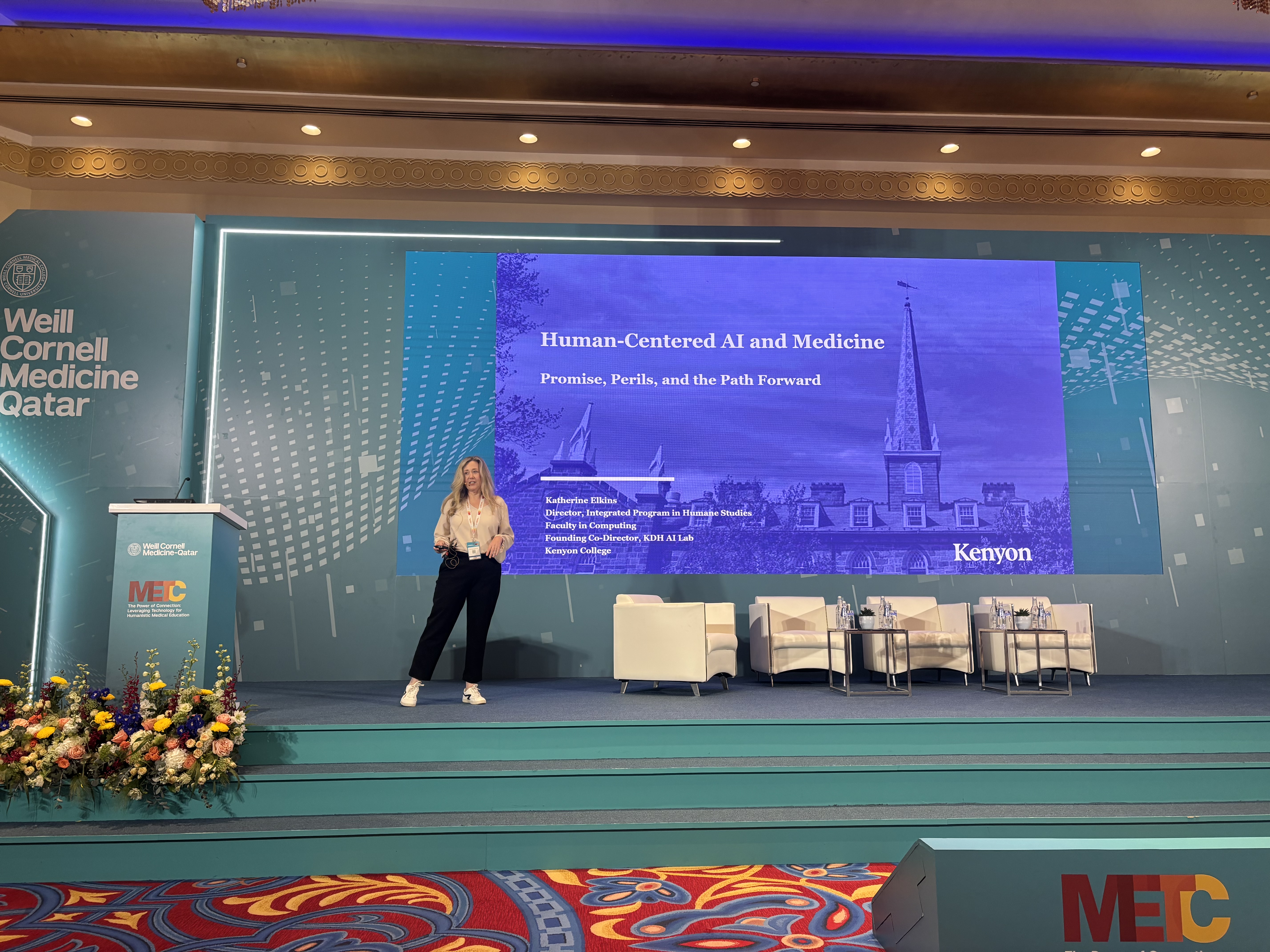
Bloomberg Learning AI Strategy program →October 2025 · Keynote · Doha, Qatar
At the Weill Cornell Medicine-Qatar METC Conference, Elkins examined narrative, emotion, agency, and interpretation in high-stakes clinical decision-making.
2025 · NIST AISIC plenary
A plenary discussion grounded in consortium work on behavioral evaluation, ethical reasoning, red-teaming, and the evidence institutions need to assess advanced AI systems.
Related model-evaluation research →2025 · Schmidt Sciences HAVI
How open AI tools can help rescue endangered cultural archives while preserving provenance, local knowledge, ambiguity, and the role of expert interpretation.
Archival Intelligence →2024 · ICML oral · Vienna, Austria
An oral presentation of a benefit–risk framework for open-source and open-weight models, including technical capability, access, accountability, and governance.
Read the ICML paper →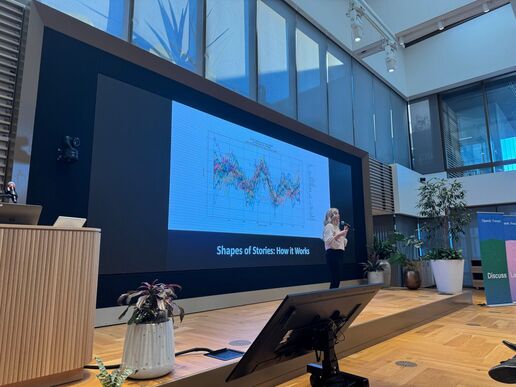
October 2025 · OpenAI Higher Education Forum · San Francisco
As an invited Education Guild faculty speaker, Elkins discussed computational humanities research and a curriculum in which students investigate model behavior rather than encounter AI only as a classroom tool.
Human-centered AI education →April 2026 · Ohio State University
A panel with Michael Inzlicht and Sean Westwood on AI, judgment, democratic education, and the institutional conditions for civic reasoning.
Watch the conversation →June 2025 · UNESCO Regional Office for Egypt and Sudan · Cairo
A regional workshop leading into MONDIACULT 2025 on AI, cultural heritage, education, and the creative industries.
Current research in public
Talks are adapted to technical, institutional, educational, and public settings.
Reasoning, persuasion, deception, robustness, ethical judgment, red-teaming, and what behavioral experiments reveal beyond conventional performance metrics.
Model behavior and evaluation research →Coordination, debate, adversarial interaction, emergent behavior, and the design of evaluations for agents operating with other systems and people.
Current agent research →Narrative as a cognitive and emotional tool for memory, persuasion, interpretation, judgment, and human–AI interaction.
Narrative and emotion research →Endangered archives, cultural memory, provenance, interpretation, and the design of AI systems that remain accurate to historical and local context.
Archival Intelligence →Standards, comparative regulation, open-model governance, public-interest AI, and institutional decisions grounded in empirical research.
AI governance research →Earlier talks
Ohio State University, “Civic Education After AI” and AI and Democracy panel · International Society for the Study of Narrative.
OpenAI Higher Education Forum · Weill Cornell Medicine-Qatar keynote · RALLY Innovation, Indianapolis · Modern Fiction Studies AI Conference, Purdue University · Faith, Reason, and World Affairs Symposium opening plenary, Concordia College · Kahn Liberal Arts Institute, Smith College · WPI Global Lab public lecture and podcast · NEH Symposium, University of Colorado Boulder · Association for Prevention Teaching and Research keynote · Yale Alumni in AI and Innovation · UNESCO regional AI and culture workshop, Cairo · NIST AISIC plenary · Chronicle of Higher Education Virtual Forum · International Society for the Study of Narrative · ICML CODEML spotlight · Schmidt Sciences.
ICML oral, Vienna · Meta Open Innovation AI Research Community, London · Bloomberg Learning AI Strategy course, industry expert and on-screen presenter · Northrup Distinguished Lecture, Yale · Carleton College Day of Digital Humanities keynote · Lafayette College AI Literacy Across the Curriculum keynote · Austin College A.J. Carlson Lecture · Notre Dame–IBM Tech Ethics Lab · Washington University in St. Louis Stories that Win Symposium · Dartmouth.
Helix Center Emotion roundtable · American Academic Leadership Institute keynote · Mount St. Mary’s University Meredith-Donovan Lecture · Wofford College AI Working Group · Pittsburgh Supercomputing Center / McGill University, “Is Intelligence Convergent?” · University of Tennessee, Knoxville.
Helix Center roundtable, “Coding and the New Human Phenotype” · Ohio State University presentation on integrating AI into humanities research and curriculum · Modernist Studies Association presentation on transdisciplinary AI research.
Speaking inquiries
For an invitation or conversation, use the speaking inquiry form.
Speaking inquiries → Contact