Selected works
Elkins has published in both traditional humanities journals (PMLA, Narrative, Poetics Today) and computing venues (ICML, Frontiers in Computer Science, Journal of Cultural Analytics). For a complete list, see Google Scholar or Digital Kenyon.
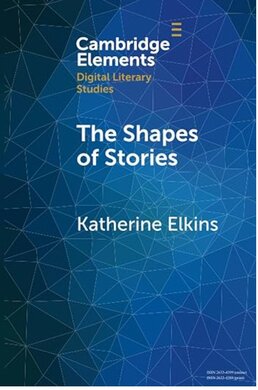
The Shapes of Stories: Sentiment Analysis for Narrative
The first comprehensive methodology for diachronic sentiment analysis in literature. Using the SentimentArcs framework — a large ensemble of NLP models ranging from lexicon-based classifiers to state-of-the-art transformers — Elkins demonstrates how computational methods can surface emotional arc in full-length literary narratives. Applications range from Woolf and Kafka to Proust and Nabokov, with the methodology subsequently adopted across disciplines including political science, social media analysis, financial narrative, and medical humanities. Student research applying the methodology has been downloaded over 95,000 times from institutions worldwide via the Digital Kenyon repository.
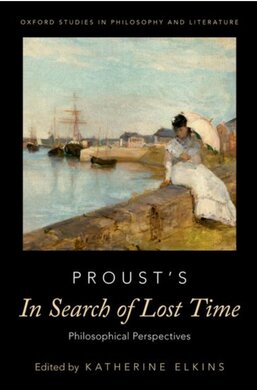
Philosophical Approaches to Proust's In Search of Lost Time (Editor)
An edited volume reframing Proust's exploration of consciousness, memory, and aesthetic experience through contemporary philosophical and scientific lenses, including integrated information theory. Contributors examine the intersection of narrative, phenomenology, and cognitive science in one of the most philosophically rich works in the Western literary canon.
AI Safety & Governance
When Prohibitions Become Permissions: Auditing Negation Sensitivity in Language Models
With Jon Chun. Audited 16 models across 14 ethical scenarios; open-source models endorse prohibited actions 77% of the time.
The Paradox of Robustness: Decoupling Rule-Based Logic from Affective Noise in High-Stakes Decision-Making
With Jon Chun. Multi-agent simulation of judicial recidivism prediction. 90+ model/reasoning combinations benchmarked.
Near to Mid-term Risks and Opportunities of Open-Source Generative AI
With Yong Suk Lee et al. Oral presentation at ICML 2024 (top 2%). Policy analysis of open-source AI.
If Open Source Is to Win, It Must Go Public
Policy paper on AI governance and the case for public participation in open-source AI development.
LLM SOTA Chatbots Ethics-Based Audit
With Jon Chun. Ethics-based audit of 8 leading commercial and open-source LLMs including GPT-4. Probing normative values and moral reasoning.
AgenticSimLaw: A Juvenile Courtroom Multi-Agent Debate Simulation for Explainable High-Stakes Tabular Decision Making
With Jon Chun and Yong Suk Lee. Multi-agent judicial simulation for explainable AI decision-making.
Syntactic Framing Fragility: An Audit of Robustness in LLM Ethical Decisions
With Jon Chun. Audit of robustness in LLM ethical decision-making under syntactic framing variations.
Informed AI Regulation: Comparing the Ethical Frameworks of Leading LLM Chatbots
With Jon Chun. Comparative analysis of normative ethical frameworks across leading commercial and open-source language models.
Comparative Global AI Regulation: EU, China, and the US
With Christian Schroeder de Witt and Jon Chun. Comparative analysis of AI regulatory frameworks across three major jurisdictions.
Computational Humanities & Sentiment Analysis
The Shapes of Cinderella: Emotional Architecture and the Language of Moral Difference
Computational analysis of emotional arc across Cinderella variants in a Humanities journal special issue.
Sentiment-XAI Greybox Ensemble
With Jon Chun. Novel XAI greybox ensemble combining SOTA blackbox models with interpretable whitebox classifiers. New EPC and ECC metrics for multi-scale explainability.
What the Rise of AI Means for Narrative Studies
With Jon Chun. Response to "Why Computers Will Never Read (or Write) Literature" in the field's leading journal.
Can Sentiment Analysis Reveal Structure in a Plotless Novel?
With Jon Chun. Computational exploration of emotional arc in Virginia Woolf's To the Lighthouse.
Beyond Plot: How Sentiment Analysis Reshapes Our Understanding of Narrative Structure
How computational sentiment analysis methods reveal narrative structures invisible to traditional close reading.
Can GPT-3 Pass a Writer's Turing Test?
With Jon Chun. 362+ citations. One of the earliest systematic evaluations of GPT-3's literary generation capabilities.
Humanities & Philosophy
Proust and Integrated Information Theory
Reframing Proust's exploration of consciousness in light of contemporary theories of mind. In Philosophical Approaches to Proust's In Search of Lost Time.
A(I) University in Ruins: What Remains in a World with Large Language Models?
On the future of the university and humanistic inquiry in an era of large language models. Published in the flagship journal of the Modern Language Association.
AI Comes for the Author
On authorship, AI-generated text, and the evolving relationship between human creativity and machine generation.
Memory, Consciousness, and Embodied Aesthetic Experience
Over a dozen articles in PMLA, Poetics Today, MLN, Philosophy and Literature, MLQ, and other leading humanities journals on writers from Plato and Sappho to Wordsworth and Woolf.
For a complete list of publications and co-authors, see Google Scholar, ResearchGate, or the Digital Kenyon research repository.